Consumption as a political identity (A critique)
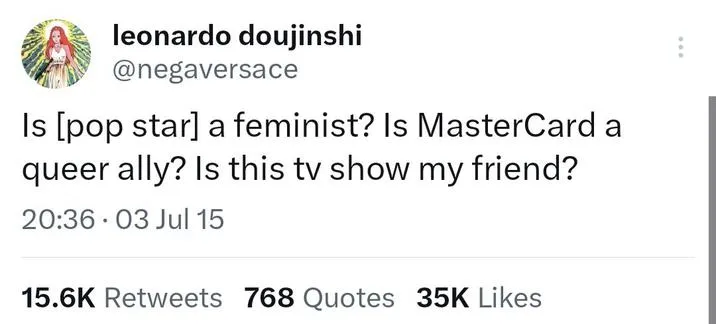
When I first thought to write about this topic, I considered asking whether or not someone's consumption habits could be considered a political identity, and realized that the answer is so obviously YES that there was no point in debating the question in a blog post. So instead, I'm going to unpack what "consumption as a political identity" means.
Our economy (GDP specifically) is expected to grow without pause. This both does and does not make sense. If people keep having families and the population grows, obviously the economy would have to grow with it. But, if the economy is encouraged to grow no matter what, more unnecessary products and services will be sold. If we enter a recession, people's jobs are on the line, so we must keep consuming to avoid a recession.
Defining consumer activism and consumption as a political identity
By consumer activism and consumption as a political identity, I'm referring to when people buy something specific or anything from a specific brand because of the political outcome that is hoped to manifest. Think of someone who intentionally shops from Black-owned businesses, or the guy who bought a Tesla because he likes Elon Musk, however rare those men may be.
Some brief history
Consuming as a political identity is a practice that has grown in popularity since the 2010s, with a big jump in participation since 2020. With the Citizens United Supreme Court case, companies had ways to fund politicians as much as they wanted to. Naturally, as political spending by corporations grew, more people started to question which politicians received their money after it left their wallets and landed in the hands of companies. Now, we have a politically conscious consumer.
In the 2010s, the politically conscious consumer (which I will now refer to as PCC) aimed to buy from brands who engaged in corporate activism and narratives of identity. We now had female CEOs, rather than CEOs that just happened to be female. Whether a brand's clothing was inclusive of body sizes, or makeup was inclusive of skin color, mattered. Songs like "All About That Bass" by Meghan Trainor made room for companies to brag about how many sizes they carried. If an influencer debuted a beauty brand without a wide range of foundation shades, critique could be expected. As Donald Trump's first presidency went on, Americans found more ways to buy their way to becoming one of Trump's biggest haters. But in 2020, a shift happened.
During Trump's first term in office, it was mostly liberals who started to care about the principles behind the companies they supported. But when mask mandates spread across the country as Covid-19 spread across the world, right-wing conspiracy theories about Dr. Fauci's deep-state infected the minds of MAGA Republicans. Suddenly, as Joe Biden became the 46th president of the United States, Republicans had their own reason to care about the politics that everyday brands promoted to (or hid from) consumers. Were these brands funding the deep-state? A big example you may be thinking of is Bud Light's 2023 "campaign" with influencer Dylan Mulvaney. I would be underestimating the scale of the backlash to this event with every adjective I can think of. Not to defend a corporation or anything, but Bud Light simply sent Mulvaney cans of the company's beer with her face on them so she could promote a March Madness sweepstakes. To even call this a "campaign" or a "collaboration" would seem dishonest. It was simply a sponsored post.
While this example stands out, it really shouldn't. The only reason it does stand out is because up until 2023, Republican PCCs hadn't really attacked any big brands for being "too woke". The Little (woke) Mermaid live-action remake was announced in 2019, but that's the only other mainstream example I can think of. Behind the scenes, Republicans were consuming differently, they just had no reason to announce it.
Take the Daily Wire's anti-woke products: Jeremy's Razors and Jeremy's Chocolates. I'll start with the razors.
Harry's, a men's shaving company, were previous sponsors of The Daily Wire. But when Harry's expressed a ""values misalignment"" and stopped sponsoring them in 2022, The Daily Wire got so offended that they decided to start their own razor company.
Then, when Hershey's had the balls to "put an activist on the wrapper for International Women’s Day", The Daily Wire did "the only responsible thing" (the snowflake thing) and started making their own chocolate, too.
Now, conservatives could join liberals to the party of consumer activism.
My critique
Consumption as a political identity is a tool that continues the expansion of American politics into the realm of the reactionary. The need to perform and therefore identify as a "good, PCC" to others and to one's self is reactionary.
As someone who is interested in ethical consumption and politics, I understand why anyone would want to know what politicians or specific policies are being funded by the companies they buy from. However, I see two main problems with consumer activism.
Problem #1: Consumer activism still requires us to be consumers
When people discuss consumer activism, the focus is largely on where something is bought. Did you buy from anti-DEI Target? Did your recent purchase at Skims fund a store location in Israel? But, I'd argue that even better questions to ask are what exactly are you buying, and do you need it?
When you do need something, it is important to do your research on the company behind what you're about to purchase. But many consumer activists (sometimes this includes me) will buy something unnecessary and justify that decision because their purchase supports some sort of cause. For example, in 2025 I bought a Fire Aid t-shirt to support the people who lost their homes during the Southern California wildfires of that January. But honestly, I did not need another black t-shirt. If my goal truly was to support those impacted, I could have (and probably should have) just donated money instead of buying a charity product.
If we ever expect real change when it comes to financing elections, making sure the "right side" gets the money does not do anything besides reinforce the current system. I'm not saying that you shouldn't care how companies donate politically. You should. But if you actually want to "vote with your dollars", it would be more effective to just donate straight to the campaigns you believe deserve your financial support, while boycotting companies whose values you disagree with.
Instead of being consumer activists, we should be anti-consumer activists.
Problem #2: Consumption of political sayings and icons makes our politics shallow
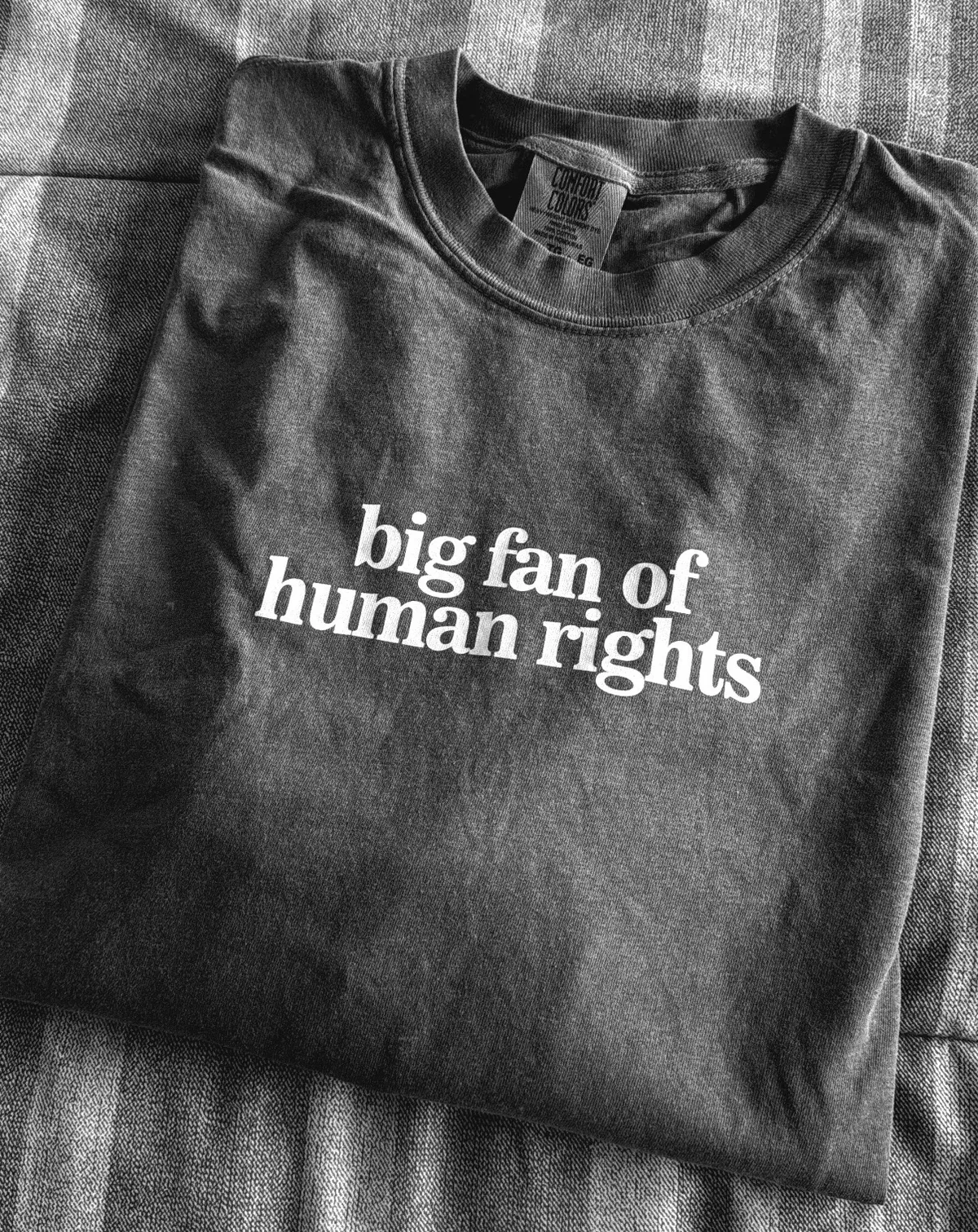
A sticker on a reusable water bottle that reads “cute-servative”. The t-shirt I’m wearing right now that says “big fan of human rights” all in lowercase. A pin that says “ICE out”. What do these items have in common? They can be bought. But more importantly, they have sayings. When consumption is tied to political ideology, that ideology becomes consolidated into icons.
By "ICE out", what is one really saying? ICE out of where? Out of Minneapolis, Minnesota? I'd argue they should be out of money, and therefore a pin I could wear would be "defund ICE". At least that has a more direct call to action.
I realized this problem with buying things with political sayings earlier this year, when I bought my "big fan of human rights" shirt. I posted the shirt, all aesthetic on my Instagram story, as one does. Subsequently, I received a DM from someone who (as far I know) does not support Palestinians' right to self determination and does not oppose Israel's genocide in Gaza. Clearly, it is impossible to be a fan of human rights if you hold these positions. Yet, this person assumed that they agreed with me.
I'll make the implicit problem explicit in case it's hard to tell what I'm pointing out. Sayings, such as "ICE out" or "big fan of human rights", are too vague. They contain no actionable advice or request for whoever reads them. The same can be said for emojis.
For the nth time, I understand why icons become political. It's helpful to have dog whistles if, for example, you're part of a marginalized group. You can communicate to other people within that group that you're "one of them" without outing yourself that you're "one of them" to people outside of the group. But this can turn into a slippery slope.
During the height of the Black Lives Matter movement in 2020, it was expected of everyone who was not racist to post a black square on social media. Some people attached statements to their black squares, but it was not a requirement. The black square itself became a way to signal your nonracism. Turning icons into political stances makes it easier for people to feel like they're doing something while they're really doing nothing at all. Further, it reinforces the homogenization of politics. If you don't say the thing, post the icon, or repost the infographic, you can't sit with us.
This makes people replace action with performance to the detriment of our progress. There's space for performative politics, but this isn't it. When people follow the crowd, even when the crowd is right, that just means that they abandoned critical thinking in favor of social currency. It's OK to repost what other people have posted or follow trends as long as you're not doing it blindly.
Conclusion
If you made it this far, thank you! If you'd like to leave a Komment on this post, please do.